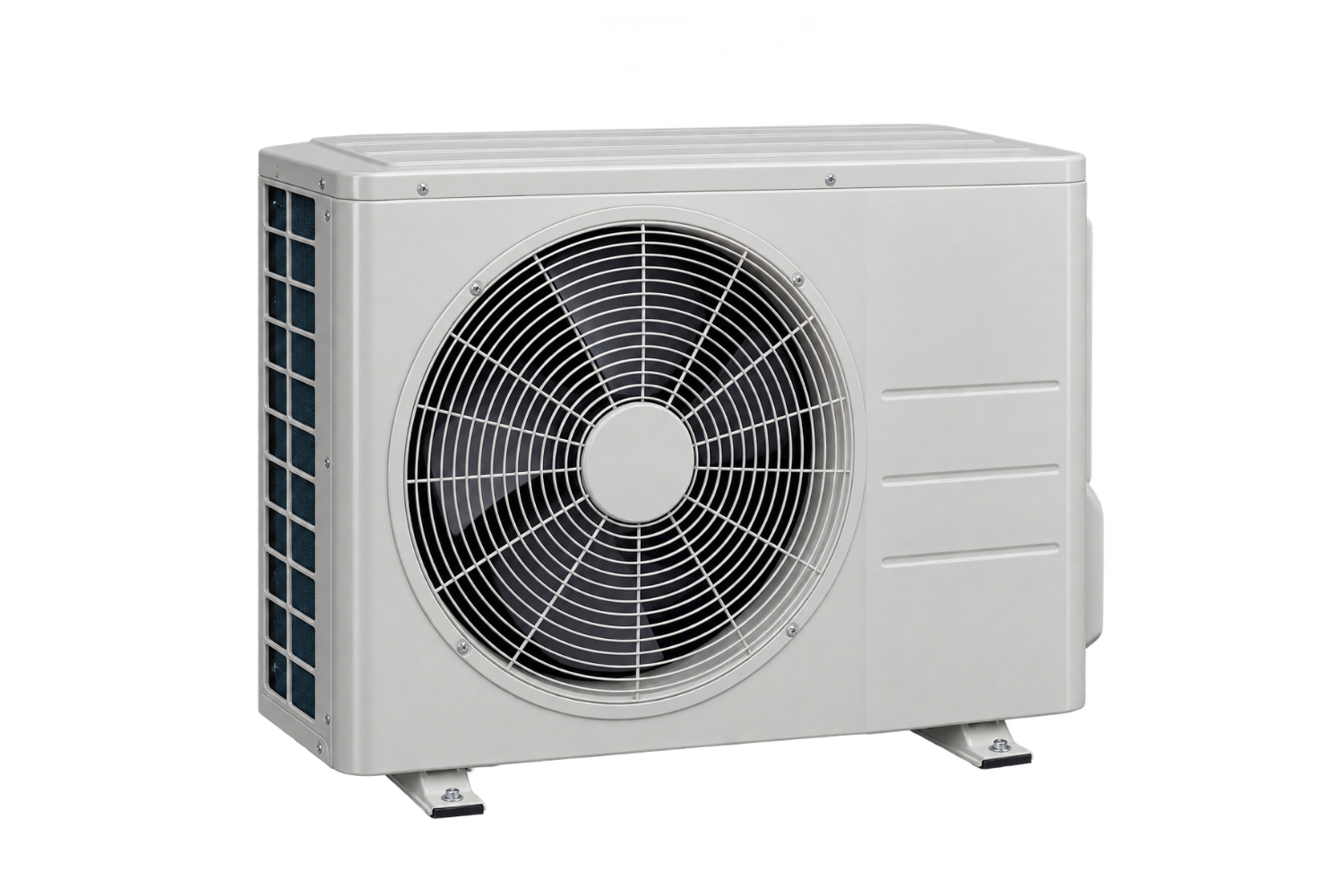
Air-to-water heat pumps explained
An air-to-water heat pump replaces your boiler and heats your radiators or underfloor heating and your hot water. Whether it suits your home depends on a proper heat-loss assessment and system design.

The key points
- It's a whole-home heating replacement, not a room-by-room fix
- Runs at a lower temperature than a boiler, so the system is designed around that
- Needs a hot water cylinder and an outdoor unit
- Grant support is available for suitable homes
- The assessment is the part that de-risks the decision
How it differs from air-to-air
Air-to-air heats and cools the air in individual rooms. Air-to-water heats water that runs through your existing wet heating system — radiators or underfloor — and fills a hot water cylinder. It’s the option when the whole house needs heating, not just a few rooms.
Why it runs cooler, and why that matters
A boiler pushes out water at around 70°C in short bursts. A heat pump is most efficient at 45–55°C, running for longer at a gentler output. That’s more comfortable once you’re used to it, but it means every radiator has to be checked for output at the lower temperature. Some get upsized. This is normal, and it’s why the design step isn’t optional.
What the assessment covers
- room-by-room heat-loss calculations
- insulation, glazing and draughts
- existing pipework and radiator sizes
- space for a cylinder and a position for the outdoor unit
- your eligibility for grant support
If your home isn’t ready
Sometimes the honest answer is ‘insulate first, then revisit’. We’ll tell you that, and the order to do things in, rather than fitting a system that won’t perform.
See the air-to-water service page or start your home assessment.
More in this guide

Can a heat pump replace my boiler?
In most suitable homes, yes — an air-to-water heat pump can fully replace a gas, oil or LPG boiler for heating and hot water.…
Read moreQuestions
Will it keep my house as warm as my boiler?
A properly assessed and designed system will, including in winter. The lower flow temperature means steadier, more constant warmth.
Do I have to replace all my radiators?
No — but some may need upsizing. The assessment tells you which, and it's priced upfront.
How disruptive is the installation?
It's more involved than a boiler swap: cylinder, outdoor unit, some pipework and radiator changes. Typically several days.