Solar PV
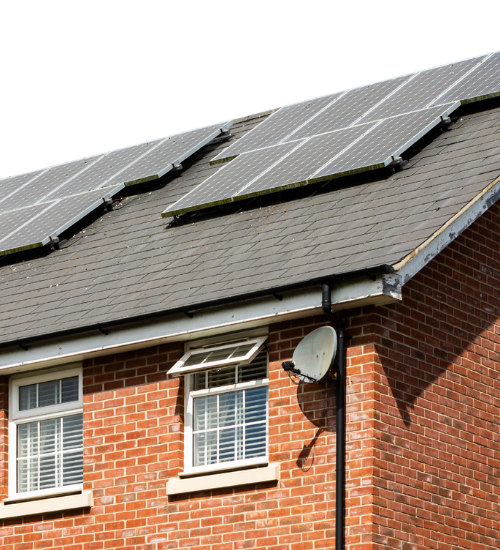
Solar panels generate electricity from daylight so you buy less from the grid. How much you save depends on your roof, how much electricity you use and when you use it — which is exactly what we work out before recommending anything.

Who this suits
- Households with high electricity use, especially during the day
- Homes with an EV, or planning one
- People working from home
- Homes planning future electrification such as a heat pump
- Anyone wanting more control over a volatile electricity bill
Who it may not suit
- Heavily shaded roofs, or roofs in poor condition that need work first
- Properties where the roof orientation and pitch give a weak return — we'll model it and show you
- Homes expecting to move very soon, where payback won't be reached
Generate more of your electricity at home
Solar is a long-term investment in your property, and it should be sold on clear household economics — not on slogans. A good system covers a solid share of your daytime electricity, pays you for the surplus, and reduces how exposed you are to the next price rise. A poor one is oversized, or fitted to a roof that was never going to return well. The difference is honest modelling up front.
What actually decides your numbers
- how much electricity you use, and how much of it during daylight hours
- your roof’s orientation, pitch and shading through the day
- the system size and the quality of the installation
- your export tariff, and whether a battery earns its place
We look at all of this before recommending a size. If the case is weak for your home, we’ll show you why.
Batteries: only when they make sense
A battery is not automatically part of a solar system. It’s worth it for some households and marginal for others, depending on your usage pattern, tariff and generation. See our battery storage page — telling you that you don’t need one is part of how we work.
What you get from us
A written recommendation with your modelled annual generation, a realistic view of savings and export income, every warranty in writing, and a fixed price after the survey. Then installation, monitoring set-up so you can see it working, and export registration so you’re paid for what you send back.
Start your home assessment for a straightforward view of what solar would do for your home.
How it works
Solar panels contain photovoltaic cells that turn daylight — not just direct sunshine — into direct-current electricity. An inverter converts that into the alternating current your home uses. Your home draws on the solar first, tops up from the grid when it needs more, and exports any surplus. Panels still generate on overcast days; output simply varies with the light.
Meaningful benefits
- Generate a meaningful share of your own daytime electricity
- Reduce exposure to electricity price rises
- Get paid for what you export under the Smart Export Guarantee
- Long panel lifespan — typically 25 years of useful generation or more
- Pairs well with an EV charger, a battery or a future heat pump
What to understand
- Generation is seasonal — strong in summer, modest in mid-winter
- Without a battery, electricity used while the house is empty is exported cheaply
- Projected savings are evidence-based estimates, not guarantees
- A technical survey confirms roof structure, wiring and the final layout
A clear path from question to decision
- 01
Enquiry and a phone call about your electricity use and roof
- 02
A home consultation and roof review
- 03
A technical survey — structure, wiring, shading, layout
- 04
A written recommendation: system size, expected generation, realistic economics
- 05
Your decision, with no pressure
- 06
Installation, commissioning, monitoring set-up and export registration
What it costs
from £5,000 for a typical domestic system
Price scales with the number of panels and the inverter. A battery is quoted separately and only where it makes sense. Firm figures follow the survey.
Recent solar pv work

Solar PV on a Wakefield bungalow
A retired couple with high daytime electricity use fitted a modest, well-sized solar array on a clear, south-facing bungalow roof, with the wiring left…
Read more
Solar and battery, Victorian terrace in York
A work-from-home household in a Victorian terrace with high evening use fitted a compact solar array and a right-sized battery so daytime generation carries…
Read moreQuestions
Is solar still worth it?
For many homes, yes — particularly with higher daytime use and a sensible export tariff. We model your specific case rather than quoting an average.
Do solar panels work in Yorkshire?
Yes. Panels run on daylight, and a well-designed system generates well across a typical Yorkshire year, strongest from spring to autumn.
Do I need a south-facing roof?
No. South is ideal, but east and west roofs work and can spread generation across the day. We model your actual roof.
What happens to electricity I don't use?
It's exported to the grid and you're paid for it under the Smart Export Guarantee, or stored if you have a battery.
Will panels damage my roof?
Fitted correctly, no. The survey checks the roof structure and condition first; if repairs are needed, we'll say so.
How long do panels last?
Typically 25 years or more of useful generation, with performance easing gradually over time.