Power-cut backup: what stays on with solar and a battery?
With a compatible inverter, a backup gateway and planned wiring, a solar and battery system can keep agreed essential circuits running in a power cut. Without them, most systems switch off when the grid goes down.
The key points
- Most solar systems shut down in a power cut for safety
- Backup needs a compatible inverter, a gateway and agreed circuits
- Typical backup: lighting, fridge, broadband, phone charging
- Runtime depends on battery charge, solar output and what you run
- Backup is mainly peace of mind, not savings
The short answer
With the right equipment, a solar and battery system can keep agreed essential circuits running in a power cut: typically lighting, the fridge, broadband and phone charging. But it isn’t automatic. Most solar and battery systems switch off when the grid goes down, for the safety of people working on the network. Backup needs a compatible inverter, a backup gateway and wiring planned in advance.
Why systems switch off in a power cut
Grid-connected systems are designed to stop feeding power out when the grid fails, so they never send electricity into lines that engineers think are dead. That means panels on your roof won’t power your home in a power cut on their own. A backup set-up separates your home’s essential circuits from the grid first, then powers them from the battery and panels.
What you can run
That depends on three things:
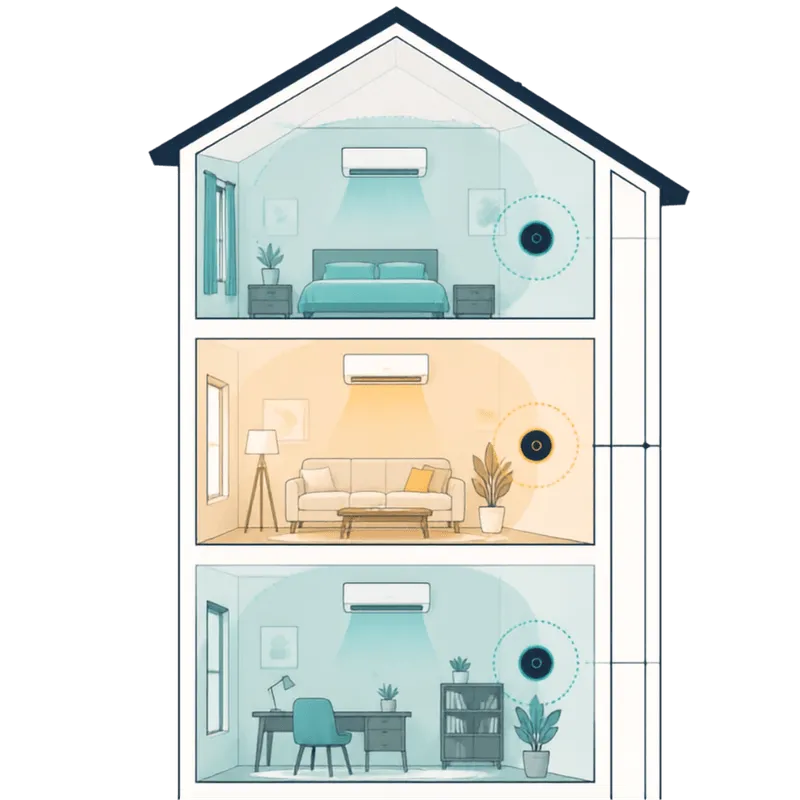
- Which circuits are on backup. These are agreed at design. Lighting, the fridge and freezer, broadband and a few sockets are typical. Electric showers, ovens, heat pumps and car chargers usually aren’t, because they’d empty the battery quickly.
- How much is in the battery when the power goes, and what the panels are producing. A sunny afternoon cut is very different from a winter evening one.
- How much you switch on. Lights and a fridge can run for many hours; a kettle and an oven won’t.
If you have a gas boiler, ask whether it can be put on the backup circuit: most need electricity to run their controls and pump.
What it costs
Our current solar and battery package is £6,250 fully installed, and it does not include backup on its own. The backup gateway is from £1,295 extra, fitted the same day, and the combined system with backup is from £7,545. Includes standard installation and scaffolding to one elevation. Additional scaffolding or non-standard access will be assessed and quoted separately before you commit. Final specification and price are subject to technical assessment. 0% VAT currently applies to eligible domestic installations until 31 March 2027; scheduled to rise to 5% from 1 April 2027. See battery storage for what’s included.
Is backup worth it?
Power cuts are rare for most homes, so backup is mostly about peace of mind rather than savings. It makes more sense if you work from home, live rurally where cuts last longer, rely on medical equipment (always have a separate plan for that), or simply want the lights and fridge to stay on. If none of those apply, you may not need it, and that’s fine.
Read Do you need a battery with solar panels? or start your home assessment and tell us what you’d want to keep running.
Sources
Questions
Will my solar panels work in a power cut?
Not on their own. Grid-connected systems switch off for safety unless a backup system isolates your home first.
Can backup run my whole house?
Usually only essential circuits. High-power appliances like ovens, showers and car chargers would drain the battery quickly.
How long will backup last?
It depends on how charged the battery is, what the panels are producing and what you switch on.
Can I add backup later?
Often, depending on the inverter. It's simplest to plan at installation.
Get advice for your home
Answer a few questions about your home for a straight answer on what suits it, or send us a short message. No pressure, no obligation.

Or send a quick message instead
Thank you, that’s with our team
Someone will be in touch in the way you asked. No pressure, no obligation.